
Ad Creative Design Principles That Convert (2026)
Ad Creative Design Principles 2026: The Ultimate Guide to High-Performance Facebook & Meta Ads↗
In 2026, ad creative quality has become the single most important factor determining campaign success. With Meta's AI-driven delivery system prioritizing creative relevance over manual targeting, mastering creative design principles is no longer optional --- it's essential for any serious advertiser. Research from Nielsen's ad effectiveness studies↗ confirms that creative quality accounts for up to 50% of campaign performance variability across digital platforms.
This comprehensive guide covers everything you need to know about creating high-converting Facebook creative design, Meta Ads visual strategies, and conversion-driven creative that stops the scroll and drives action.
Table of Contents
- The Creative-First Era
- Platform-Specific Formats
- Visual Design Principles
- Video Creative Best Practices
- Static Image Design
- Ad Copy and Messaging
- Creative Testing Framework
- Creative Production Workflow
- FAQ
The Creative-First Era
The Algorithm Shift: Why Creative Matters More Than Ever
The advertising landscape has fundamentally changed. Meta's AI delivery system now prioritizes ad creative relevance over traditional targeting parameters:
| Factor | 2020 Importance | 2026 Importance | Impact on Strategy |
|---|---|---|---|
| Targeting Precision | High | Medium | Broader audiences work better with strong creative |
| Creative Quality | Medium | Critical | Primary performance driver |
| Bid Strategy | High | Medium | Automated bidding handles optimization |
| Budget Allocation | Medium | Medium | Focus shifts to creative production |
| Creative Testing | Low | High | Continuous experimentation required |
The Key Implication: Your ad creative is now your targeting. In the AI-driven era, the algorithm finds your ideal customers based on how they respond to your creative, not pre-defined audience segments.
💡 Pro Tip: Start with 3-5 creative concepts per campaign. Let Meta's AI determine which creative resonates with which audience segments.
Creative as Your Competitive Advantage
Why Ad Creative Design Determines Success:
- AI handles distribution — The algorithm optimizes who sees your ads
- Audiences are broadly targeted — Interest targeting has diminished returns
- Creative stops the scroll — Visual impact determines whether users engage
- Creative communicates value — Your value proposition lives in the creative
- Creative drives action — The CTA and design guide user behavior
The 3-Second Rule: Capture Attention Fast
You have exactly 3 seconds to capture attention in the feed:
| Time Window | User Action | Design Priority |
|---|---|---|
| 0.0s - 0.5s | Visual recognition | Bold, contrasting visuals |
| 0.5s - 1.5s | Interest generation | Pattern interrupt or hook |
| 1.5s - 3.0s | Value proposition | Clear benefit statement |
| 3.0s+ | Engagement or scroll | Retention through storytelling |
Design for the scroll. Users make unconscious decisions in milliseconds. Your visual design must interrupt patterns and create immediate interest.
Platform-Specific Formats
Meta Ads Creative Formats
Understanding platform specifications ensures your creative design looks professional and performs optimally. For the most up-to-date creative specs, consult Meta's Ad Format Guide↗:
Feed Ads (Facebook & Instagram)
| Specification | Requirement | Best Practice |
|---|---|---|
| Aspect Ratio | 1:1 (square) or 4:5 (vertical) | 4:5 maximizes screen real estate |
| Resolution | 1080x1080 or 1080x1350 minimum | Higher resolution for quality |
| Video Length | 15-60 seconds | 15-30 seconds optimal |
| Text Overlay | 125 characters recommended | Less text = better delivery |
| File Size | Max 4GB | Optimize for fast loading |
Stories Ads (Instagram & Facebook)
- Aspect ratio: 9:16 (full vertical)
- Resolution: 1080x1920
- Video length: 15 seconds maximum
- Design consideration: Full-screen immersive experience
- Safe zones: Keep text within center 80% to avoid UI overlap
Reels Ads
- Aspect ratio: 9:16
- Resolution: 1080x1920
- Video length: 15-30 seconds
- Audio: Trending audio friendly (licensing required)
- Style: Native, organic feel performs best
Carousel Ads
| Feature | Specification | Creative Opportunity |
|---|---|---|
| Card Count | 2-10 cards | Sequential storytelling |
| Aspect Ratio | 1:1 per card | Consistent design system |
| Links | Unique per card | Product-specific CTAs |
| Best For | Product showcases, tutorials, storytelling | Multi-step narratives |
Collection Ads
- Cover image or video + product grid
- Instant Experience option for immersive browsing
- E-commerce optimized with automatic product feeds
- Ideal for catalog sales and product discovery
Google Ads↗ Creative Formats
| Format Type | Visual Requirements | Best Use Case |
|---|---|---|
| Search Ads | Text-only with ad extensions | High-intent queries |
| Display Ads | Responsive (multiple assets) | Brand awareness |
| Video Ads | Skippable, non-skippable, bumper | YouTube campaigns |
| Shopping Ads | Product image required | E-commerce sales |
| Performance Max | All asset types combined | Full-funnel campaigns |
LinkedIn Ads Creative Specifications
- Single image: 1200x627 (horizontal)
- Carousel: 1080x1080 per card
- Video: 2560x1440 maximum
- Document ads: PDFs for lead generation
- Tone: Professional, data-driven
Visual Design Principles
The AIDA Framework in Ad Creative Design
Apply the classic AIDA model to your visual design:
Attention
- Bold colors that contrast with the platform UI
- Movement through video or animation
- Unexpected imagery that interrupts scrolling patterns
- Pattern interrupt techniques (visual surprises)
Interest
- Relatable scenarios your audience identifies with
- Problem identification that resonates
- Curiosity gap creation
- Social proof elements (ratings, user counts)
Desire
- Benefit visualization showing outcomes
- Transformation imagery (before/after, compliant)
- Lifestyle association (aspirational content)
- Scarcity and exclusivity indicators
Action
- Clear CTA button with high contrast
- Urgency elements when appropriate
- Risk reversal (guarantees, free trials)
- Next step clarity (what happens after clicking)
Color Psychology for Ad Creative
| Color | Psychological Association | Best Applications | Industries |
|---|---|---|---|
| Red | Urgency, excitement, action | Sales, CTAs, limited offers | Retail, Food, Entertainment |
| Blue | Trust, stability, professionalism | B2B, finance, healthcare | Finance, Tech, Healthcare |
| Green | Growth, money, sustainability | Finance, eco-friendly products | Finance, Wellness, Environment |
| Orange | Energy, affordability, creativity | CTAs, deals, youth brands | E-commerce, Sports, Food |
| Purple | Luxury, creativity, wisdom | Premium brands, beauty | Beauty, Luxury, Education |
| Black | Sophistication, power, elegance | Luxury, fashion, premium | Fashion, Luxury, Automotive |
| Yellow | Optimism, attention, warmth | Headlines, warnings, youth | Food, Children's products |
Color Contrast Best Practices:
- Ensure text readability with sufficient contrast
- Maintain WCAG 2.1 compliance↗ (4.5:1 ratio minimum)
- Keep brand color consistency across campaigns
- Make CTA buttons visually distinct and prominent
Typography Best Practices for Meta Ads
Font Selection Guidelines:
- Maximum 2-3 fonts per creative (consistency matters)
- Choose fonts readable at small mobile sizes
- Ensure brand-appropriate typography
- Optimize for platform-specific rendering
Visual Hierarchy Structure:
| Element | Size | Weight | Purpose |
|---|---|---|---|
| Headline | 24-48px | Bold | Primary attention grabber |
| Subheadline | 18-24px | Medium | Supporting message |
| Body Text | 14-16px | Regular | Details and benefits |
| CTA Button | 16-20px | Bold | Clear action prompt |
Safe Zones for Text:
- Keep text within center 80% of the frame
- Avoid top and bottom edges ( Stories/Reels UI overlays)
- Consider platform-specific interface elements
- Test on actual mobile devices before launch
Composition Rules for Visual Design
Rule of Thirds: Place key elements at intersection points for natural visual flow.
F-Pattern: Users scan content in an F-shape. Place important information along the top and left side.
Z-Pattern: For simple layouts: top-left → top-right → diagonal → bottom-left → bottom-right.
Visual Hierarchy Priority:
- Primary focal point (product or hero image)
- Supporting elements (benefits, features)
- Background/context (lifestyle or abstract)
- Call-to-action (button or link)
Video Creative Best Practices
Video Structure for Maximum Retention
The Hook (0-3 seconds)
Your video lives or dies in the first 3 seconds:
- Pattern interrupt — Visual surprise or unexpected opening
- Direct address — Speak directly to the viewer
- Question opening — Engage curiosity immediately
- Visual surprise — Movement or color that stands out
The Problem (3-10 seconds)
- Identify the pain point your audience experiences
- Create relatable scenarios
- Build empathy and connection
The Solution (10-20 seconds)
- Present your product or service clearly
- Highlight key benefits (not just features)
- Include social proof elements
The CTA (20-30 seconds)
- Provide a clear next step
- Add urgency when appropriate (limited time, scarcity)
- Include visual demonstration of the action
Technical Specifications for Video Creative
| Platform | Format | Resolution | Aspect Ratios | Max File Size | Max Length |
|---|---|---|---|---|---|
| Meta Feed | MP4, MOV, GIF | 1080x1080 min | 1:1, 4:5, 9:16, 16:9 | 4GB | 240 minutes |
| Meta Stories | MP4, MOV | 1080x1920 | 9:16 | 4GB | 15 seconds |
| Meta Reels | MP4, MOV | 1080x1920 | 9:16 | 4GB | 90 seconds |
| Google Video | MP4, MOV, AVI | 1920x1080 rec | 16:9, 9:16, 1:1, 4:3 | 1GB | 6-120 seconds |
| YouTube | MP4, MOV | 1920x1080+ | 16:9 | 128GB | 12 hours |
Video Content Types That Convert
| Content Type | Best For | Key Elements | Performance Factor |
|---|---|---|---|
| User-Generated Content (UGC) | Trust building, authenticity | Real testimonials, unboxing, reviews | High engagement, lower CPM |
| Product Demonstrations | Feature education, clarity | Feature showcases, tutorials, use cases | High intent, better conversion |
| Brand Storytelling | Emotional connection | Origin stories, mission, behind-scenes | Brand recall, loyalty |
| Social Proof Videos | Trust and credibility | Testimonials, case studies, reviews | Conversion rate optimization |
| How-To/Tutorial | Education and value | Step-by-step guidance, tips | Longer watch time, shares |
Captions and Sound Design
Captions Are Non-Negotiable:
| Statistic | Impact on Creative Strategy |
|---|---|
| 85% | Watch videos without sound |
| +12% | Average increase in completion with captions |
| Accessibility | Required for inclusive design |
| Comprehension | Better understanding with text |
Caption Best Practices:
- Use large, readable text (minimum 24px equivalent)
- Ensure high contrast backgrounds for text
- Synchronize timing with speech
- Emphasize key words through styling
Sound Design Strategy:
- Use trending audio for Reels/TikTok (check licensing)
- Maintain brand-consistent music across campaigns
- Ensure clear voiceover quality
- Add sound effects for emphasis and engagement
Static Image Design
Image Types That Drive Conversions
Product-Focused Images
- Clean product shots on white or lifestyle backgrounds
- Multiple angles to show details
- Scale references for size context
- Feature callouts and annotations
Lifestyle Images
- Product in authentic use scenarios
- Aspirational situations your audience desires
- Relatable everyday moments
- Emotional connection through storytelling
Offer/Promotion Images
- Clear discount percentage or amount display
- Urgency elements (countdowns, limited quantities)
- Value proposition prominence
- Terms and conditions clarity
Social Proof Images
- Review screenshots from real customers
- Star ratings and aggregate scores
- User count milestones
- Trust badges and certifications
Design Elements for Static Creative
| Element | Purpose | Best Practices |
|---|---|---|
| Overlays | Text readability on busy backgrounds | Semi-transparent, gradient, or solid |
| Badges | Draw attention to key information | "New", "Sale", "Limited", "Bestseller" |
| Labels | Categorize and organize information | Clear typography, brand colors |
| Trust Seals | Build credibility | Security badges, guarantees, certifications |
Text Treatment Techniques:
- Text shadows for readability on complex backgrounds
- Background shapes behind text for contrast
- Highlighted key phrases for emphasis
- Strategic emoji usage (platform-appropriate)
Carousel Design Strategy
Sequential Storytelling Structure:
| Card | Purpose | Content Type |
|---|---|---|
| 1 | Problem/Hook | Attention-grabbing visual |
| 2 | Agitation | Pain point amplification |
| 3 | Solution Introduction | Product/service reveal |
| 4 | Features/Benefits | Key selling points |
| 5 | Social Proof | Testimonials, reviews |
| 6 | CTA | Clear next step |
Product Showcase Carousels:
- Each card features one product
- Consistent design template across cards
- Clear product names and pricing
- Individual CTAs per product
Educational Carousels:
- Tips and tricks related to your industry
- Step-by-step guides and tutorials
- Myth-busting content
- Industry insights and data
Ad Copy and Messaging
Copy Frameworks for High-Converting Ads
PAS (Problem-Agitate-Solve)
Problem:    "Tired of [specific pain point]?"
Agitate:    "It's costing you [consequence] every day."
Solve:      "[Product] eliminates [problem] in just [timeframe]."
AIDA (Attention-Interest-Desire-Action)
Attention:  Bold statement or question
Interest:   Unique value proposition
Desire:     Benefit visualization and outcomes
Action:     Clear, compelling CTA
FAB (Features-Advantages-Benefits)
Feature:    What it is (specification)
Advantage:  What it does better (comparison)
Benefit:    What you get (outcome)
Storytelling Framework
Setup:      The situation or context
Conflict:   The challenge or problem
Resolution: The solution (your product/service)
Headline Writing Formulas
Proven Headline Templates:
| Formula | Example | Best For |
|---|---|---|
| How to [result] without [obstacle] | "How to lose weight without giving up carbs" | Problem-aware audiences |
| The [adjective] way to [outcome] | "The easiest way to learn Spanish" | Solution-seeking audiences |
| [Number] [things] that [benefit] | "7 habits that will double your productivity" | Listicle lovers |
| Stop [problem]. Start [solution]. | "Stop overspending. Start saving today." | Frustrated audiences |
| Why [group] are switching to [product] | "Why marketers are switching to RedClaw" | Competitive positioning |
Character Count Guidelines:
| Platform | Element | Character Limit | Visible Characters |
|---|---|---|---|
| Meta | Primary Text | 2,200 | 125 (recommended) |
| Meta | Headline | 255 | 40 (recommended) |
| Meta | Description | 255 | 30 (recommended) |
| Headline | 30 | 30 | |
| Description | 90 | 90 | |
| Intro Text | 3,000 | 150 (recommended) |
Call-to-Action (CTA) Optimization
High-Performing CTA Verbs by Objective:
| Campaign Objective | Primary CTA | Secondary CTA | Tertiary CTA |
|---|---|---|---|
| E-commerce Sales | Shop Now | Buy Now | Get Yours |
| Lead Generation | Sign Up | Get Started | Learn More |
| App Installs | Download | Get the App | Install Now |
| Brand Awareness | Learn More | Discover | Explore |
| Event Promotion | Book Now | Register | Save Your Spot |
| Content Download | Download | Get the Guide | Access Now |
CTA Best Practices:
- Use action-oriented verbs (Shop, Get, Start, Download)
- Focus on benefits when possible ("Get My Discount")
- Create urgency appropriately ("Limited Time", "Today Only")
- Ensure consistency with landing page CTA
Platform-Specific Tone Guidelines
| Platform | Tone | Content Focus | Visual Style |
|---|---|---|---|
| Conversational, community-focused | Story-driven, relatable | Mix of UGC and polished | |
| Visual-first, aspirational | Trend-aware, aesthetic | Highly polished, lifestyle | |
| Professional, data-driven | Industry-specific, insights | Clean, corporate | |
| Intent-matching, solution-focused | Clear and direct | Simple, benefit-focused |
Creative Testing Framework
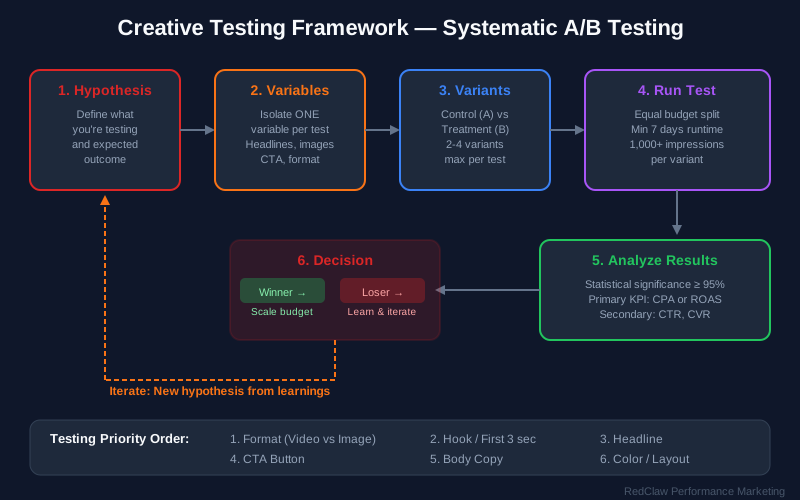
The 3-2-2 Testing Method
Before designing your tests, study what competitors are running in Meta's Ad Library↗ to identify creative trends and gaps in your market. A systematic approach to creative design testing:
3 Creative Concepts:
- Different creative angles and approaches
- Varied messaging strategies
- Distinct visual styles and formats
2 Variations Per Concept:
- Different hooks or openings
- Different CTAs
- Different visual elements
2 Audience Signals:
- Broad targeting (let AI optimize)
- Interest-based targeting (for comparison)
Testing Variables Matrix
Test One Element at a Time:
| Variable Category | Test Options | Measurement Metric |
|---|---|---|
| Hook Type | Question vs. Statement vs. Visual | Thumb-stop ratio |
| Visual Style | UGC vs. Professional vs. Graphic | CTR |
| CTA Text | "Shop Now" vs. "Learn More" vs. "Get Started" | Conversion rate |
| Value Prop | Price vs. Quality vs. Convenience | CPA |
| Format | Video vs. Carousel vs. Static | Engagement rate |
| Color Scheme | Brand colors vs. High contrast vs. Trending | CTR |
Statistical Significance Requirements
Minimum Testing Standards:
| Requirement | Threshold | Why It Matters |
|---|---|---|
| Runtime | 3-5 days minimum | Accounts for day-of-week variations |
| Conversions | 50+ per variant | Statistical reliability |
| Confidence Level | 95% | Reduces false positives |
| Performance Difference | 10%+ | Meaningful business impact |
Winner Selection Criteria:
- Primary metric: CPA (Cost Per Acquisition) or ROAS (Return on Ad Spend)
- Secondary metrics: CTR (Click-Through Rate), conversion rate
- Qualitative factors: Brand alignment, creative fatigue resistance
Creative Refresh Strategy
When to Refresh Your Ad Creative:
| Metric | Refresh Trigger | Action Required |
|---|---|---|
| Frequency | >3.0 | New creative concepts |
| CTR | Declining 20%+ | Hook variations |
| CPA | Increasing 15%+ | Full creative refresh |
| Time | 2-4 weeks | Scheduled refresh |
| Comments | Negative sentiment | Creative messaging review |
Refresh Approaches:
- New hook variations while keeping winning elements
- Updated testimonials and social proof
- Seasonal adaptations and timely content
- New product features and benefits
💡 Need expert help? RedClaw's creative strategy team designs, tests, and optimizes ad creative for high-growth brands across Meta, Google, and TikTok. From concept to conversion, we handle end-to-end creative production. Get a free creative consultation →
Creative Production Workflow
Production Pipeline Stages
1. Strategy Phase
- Define campaign objectives and KPIs
- Conduct audience insights research
- Perform competitive creative analysis
- Create comprehensive creative brief
2. Concept Phase
- Team brainstorming sessions
- Concept development and selection
- Mood board creation
- Script and copywriting
3. Production Phase
- Asset creation and sourcing
- Video shooting and editing
- Graphic design execution
- Copy refinement
4. Review Phase
- Internal stakeholder review
- Client approval process
- Platform compliance verification
- Final revisions and optimization
5. Launch Phase
- Upload to advertising platforms
- Quality assurance checks
- Initial performance monitoring
- Optimization and scaling
Asset Organization System
Recommended Folder Structure:
Creative Assets/
├── 2026/
│   ├── Q1/
│   │   ├── Campaign_SpringSale/
│   │   │   ├── Concepts/          # Initial ideas and mockups
│   │   │   ├── Raw/               # Unedited footage/images
│   │   │   ├── Final/             # Approved, ready-to-use assets
│   │   │   ├── Archive/           # Deprecated versions
│   │   │   └── Performance/       # Results and learnings
│   │   └── Campaign_ProductLaunch/
│   └── Q2/
├── Templates/                     # Reusable design templates
├── Brand Assets/                  # Logos, colors, fonts
└── Archive/                       # Historical campaigns
Recommended Tools and Resources
Design Tools
| Tool | Best For | Skill Level | Cost |
|---|---|---|---|
| Adobe Creative Suite | Professional design | Advanced | Subscription |
| Canva | Quick designs, templates | Beginner | Freemium |
| Figma | Collaboration, prototyping | Intermediate | Freemium |
| Sketch | Mac-based UI design | Intermediate | Subscription |
Video Tools
| Tool | Best For | Platform | Cost |
|---|---|---|---|
| Adobe Premiere Pro | Professional editing | Desktop | Subscription |
| Final Cut Pro | Mac professional editing | Mac | One-time |
| DaVinci Resolve | Color grading, editing | Desktop | Free/Paid |
| CapCut | Mobile editing, trends | Mobile/Desktop | Free |
Stock Resources
| Resource | Type | License | Cost |
|---|---|---|---|
| Unsplash | Photos | Free | Free |
| Pexels | Photos/Video | Free | Free |
| Shutterstock | Premium photos/video | Royalty-free | Subscription |
| Artlist | Music/SFX | Universal license | Subscription |
| Epidemic Sound | Music | Platform-specific | Subscription |
Team Structure for Creative Production
| Role | Responsibilities | Key Skills |
|---|---|---|
| Creative Strategist | Concept development, testing strategy | Marketing, psychology, data analysis |
| Graphic Designer | Static creative, brand assets | Visual design, typography |
| Video Editor | Video production, motion graphics | Editing, storytelling |
| Copywriter | Ad copy, messaging frameworks | Persuasive writing, brand voice |
| Motion Designer | Animations, dynamic creative | After Effects, motion principles |
| Creative Producer | Project management, timelines | Organization, communication |
Workflow Management Tools
- Project Management: Asana, Monday.com, ClickUp
- Video Review: Frame.io, Vimeo Review
- Design Collaboration: Figma, InVision
- Asset Storage: Dropbox, Google Drive, Bynder
FAQ
What makes a high-performing ad creative in 2026?
High-performing ad creative in 2026 combines platform-specific optimization, compelling visual storytelling, clear value propositions, and data-driven testing. With Meta's AI prioritizing creative relevance over manual targeting, your creative design quality directly determines ad performance. Focus on the first 3 seconds, use captions, and test continuously.
What is the ideal video length for Meta Ads?
For Meta Ads, optimal video lengths vary by placement: Feed ads work best at 15-60 seconds, Stories ads at 15 seconds, and Reels ads at 15-30 seconds. The first 3 seconds are critical for capturing attention before users scroll. Always front-load your most compelling content.
How often should I refresh my ad creative?
Refresh your ad creative when frequency exceeds 3.0, CTR declines by 20%+, CPA increases by 15%+, or every 2-4 weeks as a general guideline. Regular creative design refreshes combat ad fatigue and maintain performance. Monitor your frequency metric closely.
What are the best aspect ratios for Facebook and Instagram ads?
The best aspect ratios are: Feed ads (1:1 square or 4:5 vertical), Stories and Reels ads (9:16 vertical), and Carousel ads (1:1 square). Always design for mobile-first viewing as 98% of users access Meta platforms via mobile devices.
Should I use captions in my video ads?
Yes, captions are essential. 85% of users watch videos without sound, making captions critical for accessibility, comprehension, and completion rates. Use large, readable text with high contrast backgrounds synchronized with speech.
What is the 3-second rule in ad creative design?
The 3-second rule states you have 3 seconds to capture attention: 0.0-0.5s for visual recognition, 0.5-1.5s for interest generation, and 1.5-3.0s for value proposition delivery. After 3 seconds, users either engage or scroll. Design your visual creative accordingly.
What are the most effective CTA buttons for Meta Ads?
High-performing CTAs include "Shop Now" for e-commerce, "Learn More" for education, "Get Started" for SaaS, "Sign Up" for lead generation, and "Book Now" for services. Choose CTAs that match your campaign objective and landing page intent.
How do I test ad creative effectively?
Use the 3-2-2 testing method: 3 different creative design concepts, 2 variations per concept, and 2 audience signals. Test one element at a time, run for 3-5 days minimum, and aim for 50+ conversions per variant with 95% confidence before declaring winners.
What colors work best for ad creative CTAs?
Red creates urgency and excitement for sales, blue builds trust for B2B and finance, orange signals energy and affordability, and green represents growth and money. Always ensure 4.5:1 contrast ratio for accessibility compliance.
What is the difference between UGC and professional creative?
UGC (User-Generated Content) features authentic testimonials and unboxing videos that build trust through relatability. Professional creative design uses polished production for brand authority. Both have their place—test UGC for authenticity and professional creative for premium positioning.
Conclusion
High-performing ad creative design in 2026 requires a strategic, data-driven approach:
- Platform Optimization — Format-specific creative design for each placement
- Rapid Testing — Continuous experimentation with the 3-2-2 method
- Quality Production — Professional execution with attention to detail
- Data-Driven Decisions — Test rigorously and iterate based on results
- Consistent Refreshing — Combat fatigue with regular creative updates
Creative excellence is the competitive differentiator in AI-driven advertising. As Meta and other platforms increasingly rely on AI for delivery optimization, your visual design and messaging become the primary levers for performance.
📊 Ready to transform your ad performance? RedClaw Performance provides end-to-end creative strategy, production, and testing services. Explore our media buying services → or contact us directly to discuss your next campaign.
This guide was last updated on March 19, 2026. For the latest ad creative trends and Facebook creative design strategies, subscribe to our newsletter.
Internal Linking Suggestions
Related Articles:
- Meta Ads Strategy 2026: Complete Guide to Campaign Structure
- Facebook Creative Testing: The 3-2-2 Method Explained
- Visual Design for E-commerce: Product Photography Best Practices
- UGC Content Strategy: How to Leverage User-Generated Content
- Ad Copywriting Formulas: 10 Frameworks That Convert
- Meta Ads Targeting in 2026: AI-Driven Audience Strategies
- Video Ad Production: From Concept to Conversion
Resource Pages:
About RedClaw Performance
RedClaw Performance is a leading digital marketing agency specializing in Meta Ads, Facebook creative design, and performance-driven ad creative strategies. Our team of strategists, designers, and analysts helps brands achieve measurable results through data-informed creative design and continuous optimization.
Get Your Free Creative Audit →
Related Posts
iGaming Social Media Marketing: Complete Guide to Brand Growth & Player Engagement in 2026
Master iGaming social media marketing with proven strategies for Facebook, Instagram, Twitter, Telegram & more. Learn content creation, engagement tactics, compliance guidelines & build a high-converting social media system.
iGaming Ad Copywriting Tips: 15 Proven Strategies to Boost Conversion Rates in 2026
Master iGaming ad copywriting with expert tips. Learn proven strategies to write high-converting casino & sports betting ads that drive results. Complete guide with CTA examples.
iGaming Audience Targeting: Advanced Lookalike Strategies for 2026
Master advanced Lookalike Audience strategies for iGaming advertising. Learn seed audience optimization, layering techniques, and signal-based targeting to maximize player acquisition ROAS.